Many people begin an exercise program excited to “look like their goal body” — often a celebrity or model. The fitness industry and mass media promote this kind of goal heavily, in the way they market imagery and make claims for the recommendations they give, but they often hand-wave the realities behind the photos. Even splashy articles describing how an actor got in shape for a superhero role are often fuzzy about the sheer number of hours in the gym, the personal-trainer assistance, and the food-preparation support the actor gets. Working out — along with rigid eating — is a full-time job for months to prepare for those roles.
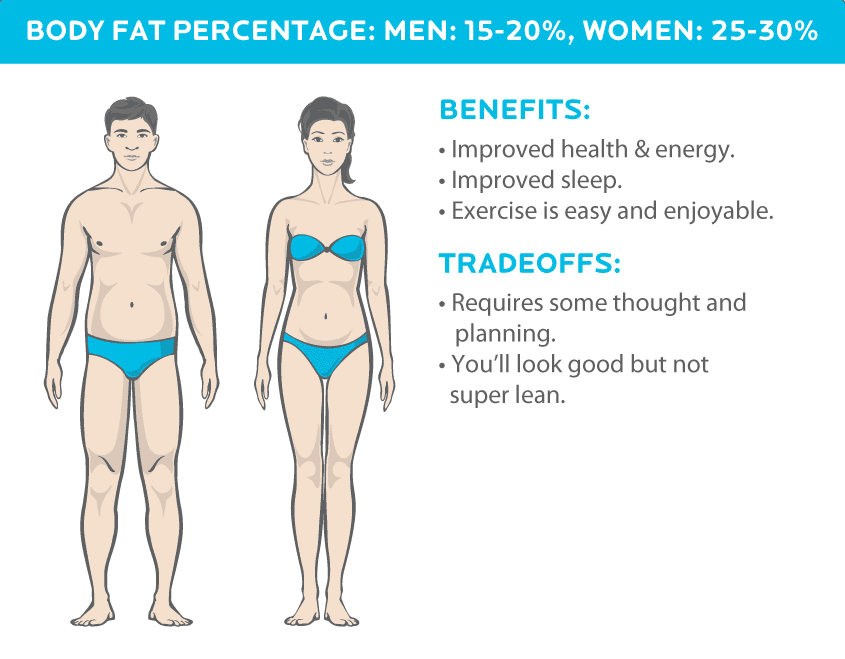
This is a detail from an infographic from Precision Nutrition that gives a great breakdown of the trade-offs of going leaner and leaner, as well as offering a handy cheat sheet for the kinds of lifestyle changes that support the different levels of leanness. (I don’t recommend pursuing the categories at either extreme, though! Note also that in the second, ultra-lean “unhealthy” category, competitors and paid models achieve that level of leanness intermittently during the year, rather than maintaining it all the time.)