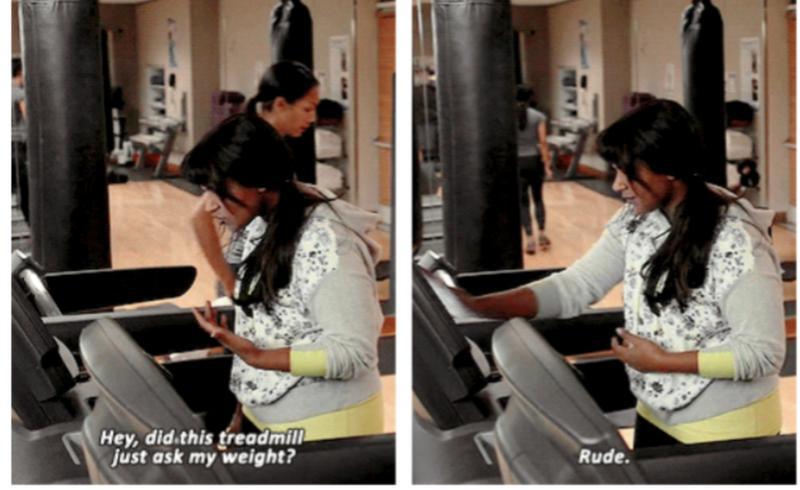
Dr Lahiri of The Mindy Project is offended when the treadmill asks her how much she weighs, but it thinks it has a good reason. It’s planning to use that information to estimate calories burned during the session. Unfortunately, calorie burn varies so much from person to person that the simple physics-based calculations gym machines do are not that accurate — and even that is just if the machine is well maintained.
One of the problems with gym-machine calorie estimates is that specific numbers like “287” or “719” look so real — it’s an example of something appealing to us because it is precise (a distinct number, particularly when it’s a small unit like calories) even when it is not accurate (actually giving you useful information). So feel free to reject the machine’s question about your weight.
Then What Should I Keep Track of?
You should definitely keep some kind of record of your exercise — even a simple record can help keep you in the habit, like a check mark on the calendar for each day you reach a minimum level of exercise.
When tracking exercise itself, try to stick with information you can truly measure:
— Time spent
— Distance covered
— Heart rate (no fitness tracker is as good at these measurements as a chest strap, so don’t let a watch, armband, or ring lead you too far down the same “precision as authority” road)
US guidelines recommend 150 minutes of moderate exercise per week, plus two strength sessions. CDC offers information about how to tell what’s moderate, too.