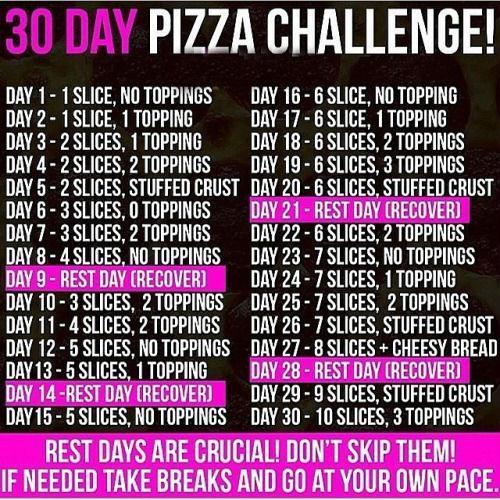
There are lots of 30-day challenges floating around online, urging people to focus on their abs, “get a beach body,” or practice a skill like planking or bodyweight squats. Are they a good idea?
In favor of a 30-day challenge:
— Relatively brief, improving likelihood of success
— A decent chunk of time, promoting a sense of accomplishment
— Can be a good way to practice a new movement or skill
— Can be a good way to way to prepare for the next step in a progression
— If you do a new one each month, you can mix some structure and variety
Against a 30-day challenge:
— It’s tough to see much in the way of results in such a short time
— Can be a big oversell (30 days to a “beach body”? Really?), potentially leading to disappointment
— Can distract from more effective, longer programs
— The known end point is a psychological barrier to establishing a habit
— Can give a sense of failure if a work or personal crisis interrupts the program
A 30-day challenge can work well to:
— Give some structure when your main goal is general, like “do some regular exercise”
— Practice a new movement to improve your coordination or learn how it feels to activate specific muscles
— Help you give a new activity an honest try if you’re experimenting
— Parcel out skills development for a larger goal (like getting your first unassisted pull-up)
OK, what if I do have a personal or work crisis in the middle?
If you’re doing a 30-day challenge with a friend, that can be frustrating for both of you. If you’re doing it on your own, you have two main options:
— If there is a progression, stick with the earlier level for a week
— Do a short version of the day’s activity
— Take a break and pick up where you left off
A 30-day challenge often prescribes relatively basic movements, intended to give you a good foundation to build on, so you don’t have to be rigid in how you approach the schedule. If you are having trouble continuing with the challenge progression, it’s always OK to repeat a week — the purpose of this kind of activity is to help you develop. It’s also OK to drop a particular challenge and try something else. The idea is to have a frame for putting activity into your day, and it’s better to find something you like than give yourself bad vibes shoehorning yourself into something you don’t like.
Image: OK, you got me. I don’t love these 30-day challenges where you do more and more squats or seconds of planking or what-have-you. I do like pizza — although I could never make it through this program! And I do like focusing on something for a month, like practicing a new movement in the gym with super light weight, so I get smoothly coordinated with it. Or even just making a commitment to do a minimum amount of walking every day for a month to shake off a long winter indoors. No matter the details, a 30-day challenge should be a fun project — never a frustrating chore.